
Why Fireproof, Waterproof and Zero-Formaldehyde Performance Matters
Wood has been the default furniture material for centuries, and for good reason: it is warm, familiar and widely available. But as building standards tighten, as homeowners demand healthier indoor environments, and as extreme weather events become more frequent, the limitations of wood are becoming impossible to ignore. Stainless steel furniture, once seen as a niche product for commercial kitchens, has matured into a legitimate residential alternative that outperforms wood in the three areas that matter most for safety and longevity: fire resistance, water resistance and indoor air quality.
This guide provides an honest, fact-based comparison to help homeowners, dealers and project buyers make an informed decision.
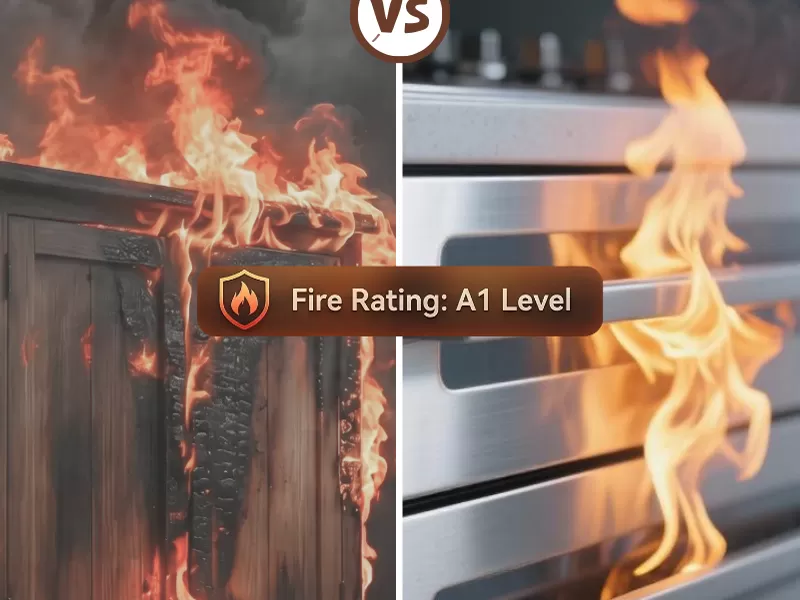
Wood is a combustible material. It ignites at approximately 250 to 300 degrees Celsius and can sustain a fire once lit. In kitchen environments, where open flames, hot oil and electrical appliances are present, wood cabinets can accelerate a fire rather than contain it. Even treated or fire-retardant wood only delays ignition; it does not prevent it, and the chemical treatments themselves may release toxic gases when heated.
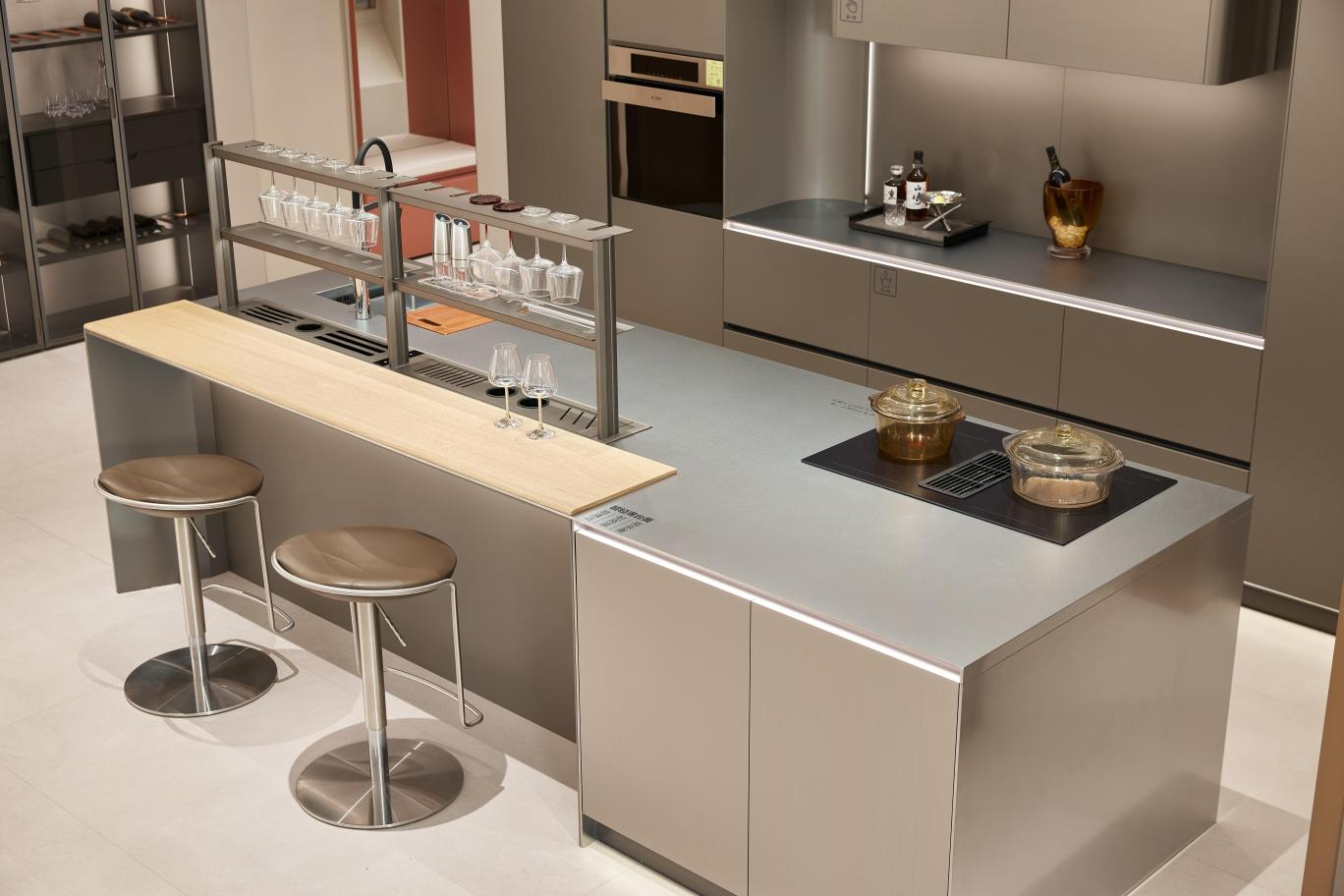
Stainless steel is classified as a non-combustible material. It does not ignite, does not contribute fuel to a fire, and maintains structural integrity at temperatures far above normal cooking conditions. With a melting point exceeding 1,400 degrees Celsius, a stainless steel cabinet will not warp, melt or collapse during a typical kitchen fire. More importantly, it does not produce smoke or toxic fumes when exposed to heat, giving occupants more time to evacuate and reducing the risk of smoke inhalation injuries.
Why this matters:
Kitchen fires are the leading cause of home fires globally, and cabinetry is often the first fuel source.
Commercial projects such as hotels and restaurants are subject to fire codes that may restrict the use of combustible materials in certain zones.
Insurance premiums for properties with non-combustible fixtures can be measurably lower.
Water is wood's most destructive enemy. Even with sealing, varnishing or laminating, wood-based furniture and cabinets are vulnerable to moisture damage through seams, edges and joints. The consequences are well documented:
Swelling and warping: MDF and particleboard can expand by 10-15% when exposed to water, permanently distorting the cabinet structure.
Delamination: laminated surfaces peel away from the substrate once moisture penetrates the edge banding.
Mold and mildew: organic materials provide an ideal breeding ground for mold spores, which can develop within 24 to 48 hours of moisture exposure.
Rot and structural failure: prolonged exposure leads to decay, compromising the load-bearing capacity of shelves and cabinet frames.
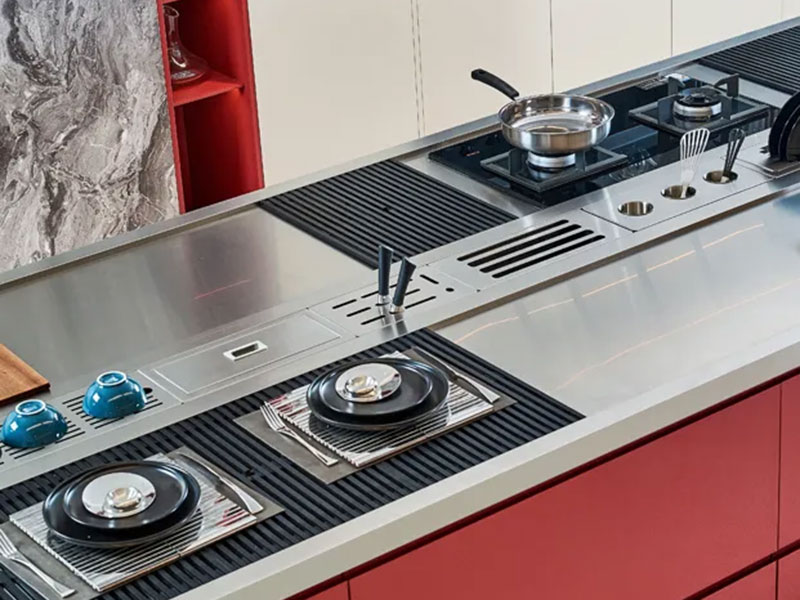
Stainless steel absorbs zero water. It does not swell, warp, delaminate or rot under any moisture condition, including full submersion. This makes it the only practical choice for environments where water exposure is constant or unpredictable:
Under-sink cabinets: the most leak-prone area in any kitchen. A stainless steel cabinet survives a pipe burst without damage; a wood cabinet may need complete replacement.
Bathrooms and laundry rooms: constant humidity and direct water contact make wood cabinets a maintenance burden. Stainless steel requires no sealing or re-coating.
Coastal and tropical homes: salt air and high humidity accelerate wood degradation. Grade 316 stainless steel thrives in these conditions.
Flood-prone regions: after a flood, stainless steel cabinets can be cleaned and returned to service. Wood cabinets must typically be torn out and replaced.
Formaldehyde is a colorless, pungent gas classified as a Group 1 carcinogen by the International Agency for Research on Cancer (IARC). It is widely used in the adhesives and resins that bind particleboard, MDF and plywood together. The result: most wood-based furniture continuously off-gasses formaldehyde into indoor air for months or even years after installation.
Key facts about formaldehyde in wood furniture:
E1 standard (common in Europe) permits up to 0.124 mg/m³ of formaldehyde emission. E0 and CARB Phase II are stricter but still allow trace amounts.
Emission levels increase with temperature and humidity, meaning kitchens and bathrooms, the warmest and most humid rooms, are the worst affected.
Long-term exposure to low-level formaldehyde is linked to respiratory irritation, headaches, allergic reactions and increased cancer risk, particularly for children and the elderly.
Even "formaldehyde-free" wood products often use alternative aldehyde-based resins that produce similar off-gassing effects.
Stainless steel contains no adhesives, no resins and no organic binders. It emits absolutely zero formaldehyde and zero volatile organic compounds (VOCs) at any temperature. For families with young children, allergy sufferers, or anyone pursuing a healthy home environment, this is not a minor benefit, it is a fundamental advantage that no wood product, regardless of certification, can match.
This zero-emission characteristic also makes stainless steel cabinetry eligible for credits under green building standards such as LEED Indoor Environmental Quality and WELL Building Standard, a growing consideration for architects and developers.
The following table summarizes the key performance differences:
Property | Stainless Steel | Wood (Solid / MDF / Particleboard) |
Fire Resistance | Non-combustible, melting point 1,400+ °C | Combustible, ignites at 250-300 °C |
Water Resistance | 100% waterproof, zero absorption | Absorbs water, swells, warps and delaminates |
Formaldehyde Emission | Zero | Varies by standard (E1/E0/CARB), never truly zero |
VOC Off-Gassing | None at any temperature | Present, increases with heat and humidity |
Mold Resistance | Impervious, no organic substrate | Susceptible, especially in humid environments |
Termite / Pest Risk | Zero | High, especially in tropical regions |
Lifespan | 30-50+ years | 10-25 years (MDF as low as 5-10 years) |
Maintenance | Wipe with damp cloth | Regular sealing, polishing, repair required |
Recyclability | 100% recyclable, infinite loops | Partially recyclable, often ends in landfill |
Insurance Benefit | May qualify for lower premiums | Standard rates, higher fire risk |
Fairness requires acknowledging that wood retains advantages in certain contexts. In dry, temperate climates with stable humidity, well-sealed solid wood cabinetry can perform adequately for decades. Wood also offers a warmth and tactile quality that, despite advances in PVD and acrylic finishes, some homeowners still prefer for living rooms and bedrooms. Budget constraints are also a factor, as entry-level wood cabinetry typically costs less upfront than stainless steel.
However, in kitchens, bathrooms, coastal areas and commercial projects, the performance gap is decisive. The question is not whether stainless steel is better in absolute terms, but whether the specific environment demands the protections that only stainless steel can guarantee.
Choose stainless steel furniture if any of the following apply to your project:
The space is a kitchen, bathroom, laundry room or outdoor area where water and heat are constant.
The property is located within 5 km of a coastline or in a tropical, high-humidity region.
Indoor air quality is a priority, especially for homes with children, elderly residents or allergy sufferers.
The project must comply with commercial fire codes or green building certifications (LEED, WELL, BREEAM).
The buyer values total cost of ownership over 20+ years rather than lowest initial price.
Wood furniture has served humanity well for millennia, but modern living demands modern materials. The three threats that wood cannot reliably defend against, fire, water and formaldehyde, are precisely the areas where stainless steel delivers uncompromising performance. As finishes and design options continue to evolve, the old trade-off between safety and aesthetics is disappearing. Today, stainless steel furniture offers both the protection your space requires and the style your project deserves.

 English